Code the future of AI
Your development skills can help build safer, smarter AI. Join one of our flexible, paid, remote coding projects now!

Code the future of AI
Your development skills can help build safer, smarter AI. Join one of our flexible, paid, remote coding projects now!

Code the future of AI
Your development skills can help build safer, smarter AI. Join one of our flexible, paid, remote coding projects now!
What are coding projects?
AI training companies need experienced developers to review and improve AI-generated code. Mindrift connects experts with these companies to build AI solutions that work in real production environments.
Your expertise helps make GenAI models and agents more reliable and useful for developers worldwide.
Project contributions include tasks like:
Identify subtle bugs and edge cases
Review AI-generated code for correctness
Evaluate architecture and performance
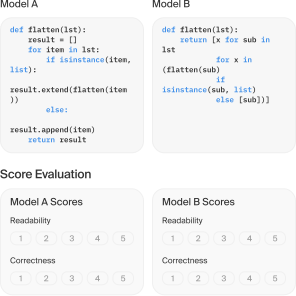
Compare multiple AI solutions to determine the best one
What you get
Up to $90 per hour
Hands-on AI experience
Flexible remote project
Global community
What you might do
What you might do
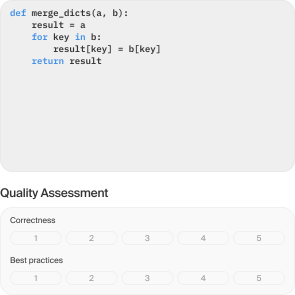
Code quality review
Evaluate AI-generated Python code for correctness, efficiency, and best practices
Example: Review a function the AI wrote to parse nested JSON structures and assess whether it handles edge cases like missing keys, circular references, and Unicode correctly.
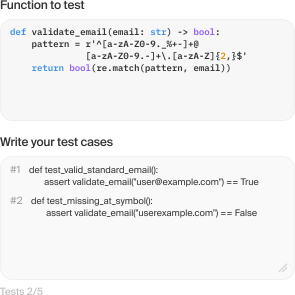
Test case writing
Write comprehensive tests that validate actual end-to-end behavior
Example: Create pytest test cases for an AI-generated REST API client, covering authentication flows, rate limiting, error handling, and concurrent requests.
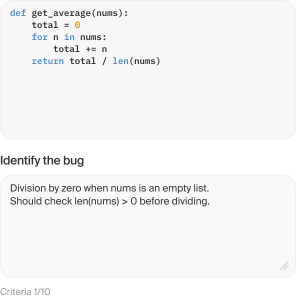
Bug identification
Spot subtle bugs and logical errors that automated testing misses
Example: Analyze AI-generated async/await code for race conditions, deadlocks, and improper exception handling in a multi-threaded data pipeline.
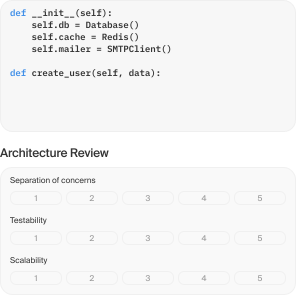
Architecture assessment
Evaluate whether AI-generated solutions follow sound engineering principles
Example: Review the AI's implementation of a caching layer and assess its memory management, eviction strategy, and thread safety.
Code comparison
Compare multiple AI-generated solutions and rank them by quality
Example: Given three AI-generated implementations of a graph traversal algorithm, evaluate each for correctness, readability, performance, and edge case coverage.
Prompt-to-code evaluation
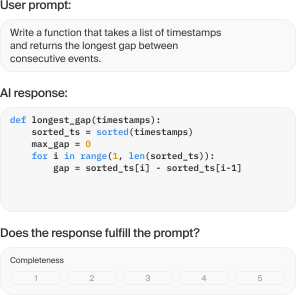
Assess whether AI-generated code accurately fulfills the original prompt requirements
Example: A user asked for a CLI tool to batch-resize images. Evaluate whether the AI's solution handles all specified formats, maintains aspect ratio, and reports errors clearly.
Code quality review
Evaluate AI-generated Python code for correctness, efficiency, and best practices
Example: Review a function the AI wrote to parse nested JSON structures and assess whether it handles edge cases like missing keys, circular references, and Unicode correctly.
Test case writing
Write comprehensive tests that validate actual end-to-end behavior
Example: Create pytest test cases for an AI-generated REST API client, covering authentication flows, rate limiting, error handling, and concurrent requests.
Bug identification
Spot subtle bugs and logical errors that automated testing misses
Example: Analyze AI-generated async/await code for race conditions, deadlocks, and improper exception handling in a multi-threaded data pipeline.
Architecture assessment
Evaluate whether AI-generated solutions follow sound engineering principles
Example: Review the AI's implementation of a caching layer and assess its memory management, eviction strategy, and thread safety.
Code comparison
Compare multiple AI-generated solutions and rank them by quality
Example: Given three AI-generated implementations of a graph traversal algorithm, evaluate each for correctness, readability, performance, and edge case coverage.
Prompt-to-code evaluation
Assess whether AI-generated code accurately fulfills the original prompt requirements
Example: A user asked for a CLI tool to batch-resize images. Evaluate whether the AI's solution handles all specified formats, maintains aspect ratio, and reports errors clearly.
Code quality review
Evaluate AI-generated Python code for correctness, efficiency, and best practices
Example: Review a function the AI wrote to parse nested JSON structures and assess whether it handles edge cases like missing keys, circular references, and Unicode correctly.
Test case writing
Write comprehensive tests that validate actual end-to-end behavior
Example: Create pytest test cases for an AI-generated REST API client, covering authentication flows, rate limiting, error handling, and concurrent requests.
Bug identification
Spot subtle bugs and logical errors that automated testing misses
Example: Analyze AI-generated async/await code for race conditions, deadlocks, and improper exception handling in a multi-threaded data pipeline.
Architecture assessment
Evaluate whether AI-generated solutions follow sound engineering principles
Example: Review the AI's implementation of a caching layer and assess its memory management, eviction strategy, and thread safety.
Code comparison
Compare multiple AI-generated solutions and rank them by quality
Example: Given three AI-generated implementations of a graph traversal algorithm, evaluate each for correctness, readability, performance, and edge case coverage.
Prompt-to-code evaluation
Assess whether AI-generated code accurately fulfills the original prompt requirements
Example: A user asked for a CLI tool to batch-resize images. Evaluate whether the AI's solution handles all specified formats, maintains aspect ratio, and reports errors clearly.
Code quality review
Evaluate AI-generated Python code for correctness, efficiency, and best practices
Example: Review a function the AI wrote to parse nested JSON structures and assess whether it handles edge cases like missing keys, circular references, and Unicode correctly.
Test case writing
Write comprehensive tests that validate actual end-to-end behavior
Example: Create pytest test cases for an AI-generated REST API client, covering authentication flows, rate limiting, error handling, and concurrent requests.
Bug identification
Spot subtle bugs and logical errors that automated testing misses
Example: Analyze AI-generated async/await code for race conditions, deadlocks, and improper exception handling in a multi-threaded data pipeline.
Architecture assessment
Evaluate whether AI-generated solutions follow sound engineering principles
Example: Review the AI's implementation of a caching layer and assess its memory management, eviction strategy, and thread safety.
Code comparison
Compare multiple AI-generated solutions and rank them by quality
Example: Given three AI-generated implementations of a graph traversal algorithm, evaluate each for correctness, readability, performance, and edge case coverage.
Prompt-to-code evaluation
Assess whether AI-generated code accurately fulfills the original prompt requirements
Example: A user asked for a CLI tool to batch-resize images. Evaluate whether the AI's solution handles all specified formats, maintains aspect ratio, and reports errors clearly.
Code quality review
Evaluate AI-generated Python code for correctness, efficiency, and best practices
Example: Review a function the AI wrote to parse nested JSON structures and assess whether it handles edge cases like missing keys, circular references, and Unicode correctly.
Test case writing
Write comprehensive tests that validate actual end-to-end behavior
Example: Create pytest test cases for an AI-generated REST API client, covering authentication flows, rate limiting, error handling, and concurrent requests.
Bug identification
Spot subtle bugs and logical errors that automated testing misses
Example: Analyze AI-generated async/await code for race conditions, deadlocks, and improper exception handling in a multi-threaded data pipeline.
Architecture assessment
Evaluate whether AI-generated solutions follow sound engineering principles
Example: Review the AI's implementation of a caching layer and assess its memory management, eviction strategy, and thread safety.
Code comparison
Compare multiple AI-generated solutions and rank them by quality
Example: Given three AI-generated implementations of a graph traversal algorithm, evaluate each for correctness, readability, performance, and edge case coverage.
Prompt-to-code evaluation
Assess whether AI-generated code accurately fulfills the original prompt requirements
Example: A user asked for a CLI tool to batch-resize images. Evaluate whether the AI's solution handles all specified formats, maintains aspect ratio, and reports errors clearly.
Code quality review
Evaluate AI-generated Python code for correctness, efficiency, and best practices
Example: Review a function the AI wrote to parse nested JSON structures and assess whether it handles edge cases like missing keys, circular references, and Unicode correctly.
Test case writing
Write comprehensive tests that validate actual end-to-end behavior
Example: Create pytest test cases for an AI-generated REST API client, covering authentication flows, rate limiting, error handling, and concurrent requests.
Bug identification
Spot subtle bugs and logical errors that automated testing misses
Example: Analyze AI-generated async/await code for race conditions, deadlocks, and improper exception handling in a multi-threaded data pipeline.
Architecture assessment
Evaluate whether AI-generated solutions follow sound engineering principles
Example: Review the AI's implementation of a caching layer and assess its memory management, eviction strategy, and thread safety.
Code comparison
Compare multiple AI-generated solutions and rank them by quality
Example: Given three AI-generated implementations of a graph traversal algorithm, evaluate each for correctness, readability, performance, and edge case coverage.
Prompt-to-code evaluation
Assess whether AI-generated code accurately fulfills the original prompt requirements
Example: A user asked for a CLI tool to batch-resize images. Evaluate whether the AI's solution handles all specified formats, maintains aspect ratio, and reports errors clearly.
Code quality review
Evaluate AI-generated Python code for correctness, efficiency, and best practices
Example: Review a function the AI wrote to parse nested JSON structures and assess whether it handles edge cases like missing keys, circular references, and Unicode correctly.
Test case writing
Write comprehensive tests that validate actual end-to-end behavior
Example: Create pytest test cases for an AI-generated REST API client, covering authentication flows, rate limiting, error handling, and concurrent requests.
Bug identification
Spot subtle bugs and logical errors that automated testing misses
Example: Analyze AI-generated async/await code for race conditions, deadlocks, and improper exception handling in a multi-threaded data pipeline.
Architecture assessment
Evaluate whether AI-generated solutions follow sound engineering principles
Example: Review the AI's implementation of a caching layer and assess its memory management, eviction strategy, and thread safety.
Code comparison
Compare multiple AI-generated solutions and rank them by quality
Example: Given three AI-generated implementations of a graph traversal algorithm, evaluate each for correctness, readability, performance, and edge case coverage.
Prompt-to-code evaluation
Assess whether AI-generated code accurately fulfills the original prompt requirements
Example: A user asked for a CLI tool to batch-resize images. Evaluate whether the AI's solution handles all specified formats, maintains aspect ratio, and reports errors clearly.
Code quality review
Evaluate AI-generated Python code for correctness, efficiency, and best practices
Example: Review a function the AI wrote to parse nested JSON structures and assess whether it handles edge cases like missing keys, circular references, and Unicode correctly.
Test case writing
Write comprehensive tests that validate actual end-to-end behavior
Example: Create pytest test cases for an AI-generated REST API client, covering authentication flows, rate limiting, error handling, and concurrent requests.
Bug identification
Spot subtle bugs and logical errors that automated testing misses
Example: Analyze AI-generated async/await code for race conditions, deadlocks, and improper exception handling in a multi-threaded data pipeline.
Architecture assessment
Evaluate whether AI-generated solutions follow sound engineering principles
Example: Review the AI's implementation of a caching layer and assess its memory management, eviction strategy, and thread safety.
Code comparison
Compare multiple AI-generated solutions and rank them by quality
Example: Given three AI-generated implementations of a graph traversal algorithm, evaluate each for correctness, readability, performance, and edge case coverage.
Prompt-to-code evaluation
Assess whether AI-generated code accurately fulfills the original prompt requirements
Example: A user asked for a CLI tool to batch-resize images. Evaluate whether the AI's solution handles all specified formats, maintains aspect ratio, and reports errors clearly.
Code quality review
Evaluate AI-generated Python code for correctness, efficiency, and best practices
Example: Review a function the AI wrote to parse nested JSON structures and assess whether it handles edge cases like missing keys, circular references, and Unicode correctly.
Test case writing
Write comprehensive tests that validate actual end-to-end behavior
Example: Create pytest test cases for an AI-generated REST API client, covering authentication flows, rate limiting, error handling, and concurrent requests.
Bug identification
Spot subtle bugs and logical errors that automated testing misses
Example: Analyze AI-generated async/await code for race conditions, deadlocks, and improper exception handling in a multi-threaded data pipeline.
Architecture assessment
Evaluate whether AI-generated solutions follow sound engineering principles
Example: Review the AI's implementation of a caching layer and assess its memory management, eviction strategy, and thread safety.
Code comparison
Compare multiple AI-generated solutions and rank them by quality
Example: Given three AI-generated implementations of a graph traversal algorithm, evaluate each for correctness, readability, performance, and edge case coverage.
Prompt-to-code evaluation
Assess whether AI-generated code accurately fulfills the original prompt requirements
Example: A user asked for a CLI tool to batch-resize images. Evaluate whether the AI's solution handles all specified formats, maintains aspect ratio, and reports errors clearly.
Code quality review
Evaluate AI-generated Python code for correctness, efficiency, and best practices
Example: Review a function the AI wrote to parse nested JSON structures and assess whether it handles edge cases like missing keys, circular references, and Unicode correctly.
Test case writing
Write comprehensive tests that validate actual end-to-end behavior
Example: Create pytest test cases for an AI-generated REST API client, covering authentication flows, rate limiting, error handling, and concurrent requests.
Bug identification
Spot subtle bugs and logical errors that automated testing misses
Example: Analyze AI-generated async/await code for race conditions, deadlocks, and improper exception handling in a multi-threaded data pipeline.
Architecture assessment
Evaluate whether AI-generated solutions follow sound engineering principles
Example: Review the AI's implementation of a caching layer and assess its memory management, eviction strategy, and thread safety.
Code comparison
Compare multiple AI-generated solutions and rank them by quality
Example: Given three AI-generated implementations of a graph traversal algorithm, evaluate each for correctness, readability, performance, and edge case coverage.
Prompt-to-code evaluation
Assess whether AI-generated code accurately fulfills the original prompt requirements
Example: A user asked for a CLI tool to batch-resize images. Evaluate whether the AI's solution handles all specified formats, maintains aspect ratio, and reports errors clearly.
Code quality review
Evaluate AI-generated Python code for correctness, efficiency, and best practices
Example: Review a function the AI wrote to parse nested JSON structures and assess whether it handles edge cases like missing keys, circular references, and Unicode correctly.
Test case writing
Write comprehensive tests that validate actual end-to-end behavior
Example: Create pytest test cases for an AI-generated REST API client, covering authentication flows, rate limiting, error handling, and concurrent requests.
Bug identification
Spot subtle bugs and logical errors that automated testing misses
Example: Analyze AI-generated async/await code for race conditions, deadlocks, and improper exception handling in a multi-threaded data pipeline.
Architecture assessment
Evaluate whether AI-generated solutions follow sound engineering principles
Example: Review the AI's implementation of a caching layer and assess its memory management, eviction strategy, and thread safety.
Code comparison
Compare multiple AI-generated solutions and rank them by quality
Example: Given three AI-generated implementations of a graph traversal algorithm, evaluate each for correctness, readability, performance, and edge case coverage.
Prompt-to-code evaluation
Assess whether AI-generated code accurately fulfills the original prompt requirements
Example: A user asked for a CLI tool to batch-resize images. Evaluate whether the AI's solution handles all specified formats, maintains aspect ratio, and reports errors clearly.
Code quality review
Evaluate AI-generated Python code for correctness, efficiency, and best practices
Example: Review a function the AI wrote to parse nested JSON structures and assess whether it handles edge cases like missing keys, circular references, and Unicode correctly.
Test case writing
Write comprehensive tests that validate actual end-to-end behavior
Example: Create pytest test cases for an AI-generated REST API client, covering authentication flows, rate limiting, error handling, and concurrent requests.
Bug identification
Spot subtle bugs and logical errors that automated testing misses
Example: Analyze AI-generated async/await code for race conditions, deadlocks, and improper exception handling in a multi-threaded data pipeline.
Architecture assessment
Evaluate whether AI-generated solutions follow sound engineering principles
Example: Review the AI's implementation of a caching layer and assess its memory management, eviction strategy, and thread safety.
Code comparison
Compare multiple AI-generated solutions and rank them by quality
Example: Given three AI-generated implementations of a graph traversal algorithm, evaluate each for correctness, readability, performance, and edge case coverage.
Prompt-to-code evaluation
Assess whether AI-generated code accurately fulfills the original prompt requirements
Example: A user asked for a CLI tool to batch-resize images. Evaluate whether the AI's solution handles all specified formats, maintains aspect ratio, and reports errors clearly.
Python
C
Java
TypeScript
C#
Rust
Go
JavaScript
C++
Kotlin
Ruby
PHP
Python
C
Java
TypeScript
C#
Rust
Go
JavaScript
C++
Kotlin
Ruby
PHP
Who it's for
AI training companies need experienced developers to review and improve AI‑generated code. Mindrift connects experts with these companies to build AI solutions that work in real production environments.
Senior Python developer
5+ years of professional Python development experience
Additional experience with C, Rust, or Go is a strong plus
Comfortable with pytest, async/await, subprocess, file operations
Experience with code review and quality assurance
Typical role: evaluate and improve AI-generated Python code
Full-stack developer
Strong backend experience (Python, Node.js, or Java)
Frontend experience with React or similar frameworks
Understanding of system design, APIs, and databases
Typical role: assess AI-generated full-stack solutions
STEM Developer
Background in mathematics, physics, engineering, or data science
Python proficiency required
Domain expertise is the differentiator
Typical role: evaluate AI-generated code in specialized STEM domains
Current Opportunities
How it works
1
Apply
Submit your CV and indicate your programming languages and experience level
2
Qualify
Complete a technical assessment to demonstrate your coding skills
3
Onboard
Get access to the platform and familiarize yourself with the review process
4
Earn
Start completing tasks at your own pace, on your own schedule
Discover Agentic AI Projects.
Be part of building safer, smarter AI
Frequently
asked questions
Frequently asked questions
Skills and technologies
What kind of coding will I do?
How much can I earn?
Work format and flexibility
How does the qualification process work?
What's Mindrift
What's Mindrift
Mindrift connects experts with real AI training projects. Developers review and improve AI-generated code used to train next-generation coding assistants. Contribute remotely, choose your schedule, and help build safer AI systems.
Get notified about new projects
AI training opportunities open regularly —
be the first to hear about them.
AI training opportunities open regularly —
be the first to hear about them.
You may opt out anytime
By submitting this form, I agree to receive communications from Toloka AI about AI-related news, invitations to relevant projects, and other updates. I can unsubscribe and request of my personal information deletion at any time.
© 2026 Toloka AI BV
© 2026 Toloka AI BV